Your facility’s lights flicker for a split second every time the HVAC kicks on. Somewhere in a server room, a voltage dip just corrupted a file transfer. These aren’t random annoyances, they’re symptoms of a power infrastructure that’s quietly costing you money, equipment lifespan, and peace of mind. The fix isn’t luck. It’s engineering.
What Are Power Control Systems?
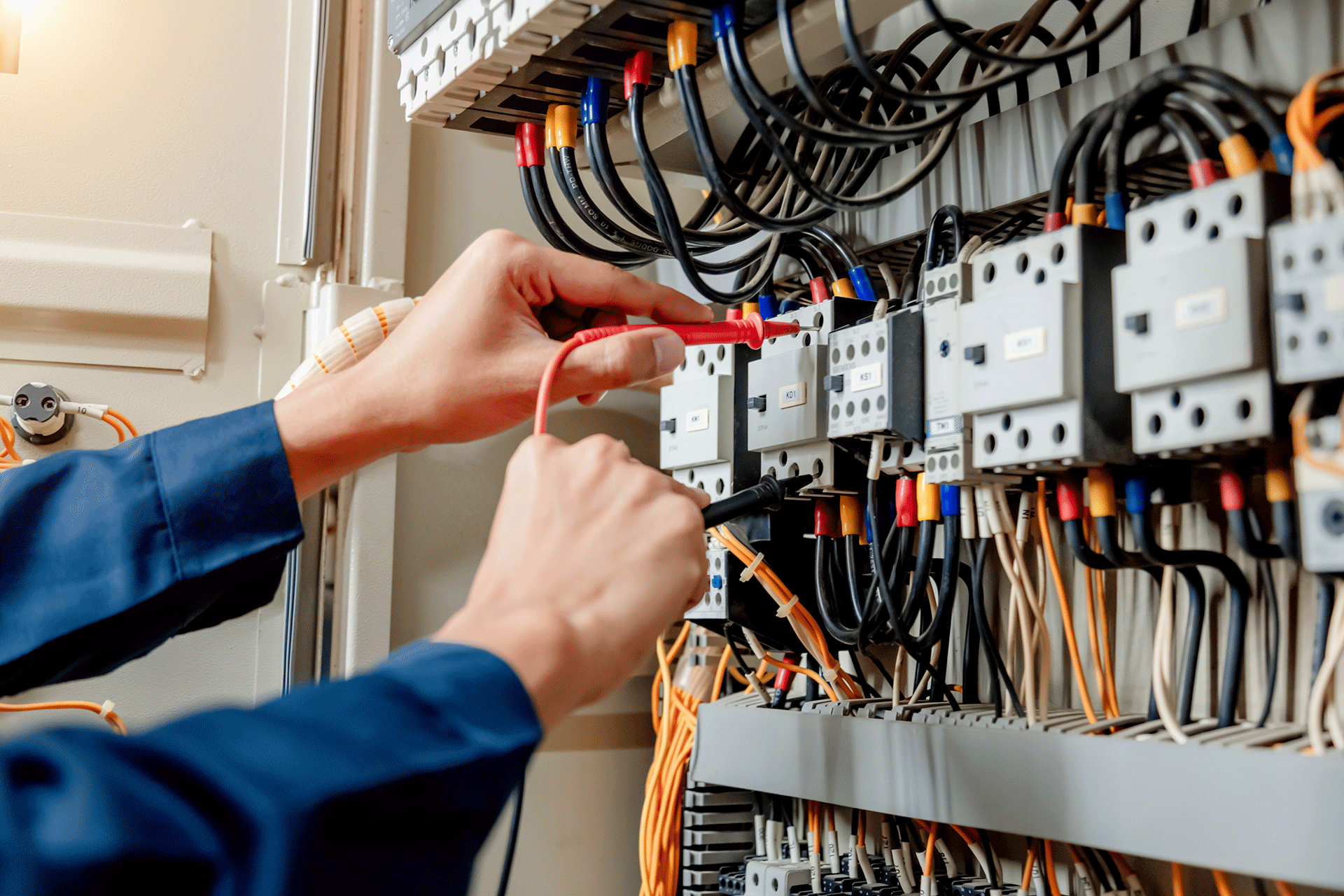
Power control systems are integrated setups of hardware and software that monitor, regulate, and distribute electrical energy across a facility. They manage voltage, current, and load balancing to protect equipment, prevent outages, and improve energy efficiency. Common components include circuit breakers, transformers, relays, and automation controllers working together in real time.
Think of these systems as the nervous system of your electrical setup. Without them, power flows blindly, inefficiently, and sometimes dangerously. With them, every amp is accounted for, every surge is absorbed, and every piece of equipment gets exactly the power it needs, nothing more, nothing less.
Why Power Control Matters More Than You Think
Most people don’t think about power control until something breaks. A tripped breaker here, a fried circuit board there. But the reality is that unmanaged power consumption and unstable voltage are silent killers of equipment longevity.
- Equipment protection: Sensitive electronics suffer long-term damage from voltage spikes and sags, even small ones.
- Energy savings: Smart load management reduces wasted electricity, directly lowering utility consumption.
- Safety compliance: Properly controlled systems reduce fire risk and meet modern electrical code requirements.
- Operational uptime: Automated failover and load shedding keep critical operations running during disruptions.
Core Components of a Modern Power Control System
1. Circuit Breakers and Protective Relays
These are the first line of defense. They detect abnormal current flow and disconnect power before wires overheat or components fail. Modern relays are programmable, meaning they can be tuned to the exact sensitivity your building needs.
2. Automatic Transfer Switches (ATS)
When utility power drops, an ATS seamlessly shifts the load to a backup generator or secondary source. For hospitals, data centers, and manufacturing plants, this transition has to happen in milliseconds, not minutes.
3. Load Management Controllers
These devices prioritize which circuits get power during peak demand or limited supply. Non-essential systems get throttled while critical operations stay fully powered.
4. Monitoring and SCADA Software
Supervisory Control and Data Acquisition (SCADA) platforms give facility managers a live dashboard of voltage, current, and load across every zone. Problems get flagged before they become failures.
Signs Your Current Setup Needs an Upgrade
Aging infrastructure doesn’t announce its decline loudly, it whispers through small, recurring issues. Watch for these warning signs:
- Frequent breaker trips without an obvious cause
- Warm or discolored outlets and panels
- Inconsistent voltage readings across circuits
- Equipment that randomly reboots or malfunctions
- A panel that’s maxed out and can’t support new loads
If any of this sounds familiar, it may be time to look deeper into your electrical distribution setup. Understanding the electrical panel upgrade process is a smart starting point, since the panel is often the root of system-wide power control issues.
Industrial vs Residential Power Control
Scale changes everything. A home system mostly deals with surge protection and efficient appliance load. Industrial systems, on the other hand, manage three-phase power, motor control centers, and complex automation sequences across multiple buildings.
That said, the underlying principle stays the same in both: deliver stable, safe, and efficient power exactly where and when it’s needed.
Best Practices for Reliable Power Control
- Schedule regular inspections of panels, breakers, and wiring connections
- Install surge protection at both the main panel and sensitive equipment level
- Use load monitoring software to identify inefficient circuits
- Work with licensed electricians for any panel or system modifications
- Document your system so future upgrades are easier to plan
Conclusion
Power control systems aren’t just technical infrastructure; they’re the foundation of safety, efficiency, and reliability for any building. From small residential setups to sprawling industrial plants, the goal remains the same: controlled, stable, and intelligently distributed electricity. Paying attention to early warning signs and investing in proper upgrades can prevent costly failures down the line and keep your entire operation running smoothly.
FAQ: Power Control Systems
What is the main purpose of a power control system?
Its main purpose is to regulate electrical flow, protect equipment, and ensure stable, efficient power distribution throughout a building or facility.
How often should power control systems be inspected?
Most facilities benefit from an annual inspection, though high-demand industrial sites may require quarterly checks.
Can a power control system reduce energy bills?
Yes. By balancing loads and eliminating waste, these systems often lead to noticeable reductions in overall energy consumption.
What’s the difference between a power control system and a backup generator?
A generator provides an alternate power source, while a control system manages, monitors, and distributes power from any source, including backup units.
Do residential homes need advanced power control systems?
Not typically as advanced as industrial setups, but surge protection, load balancing, and a properly functioning panel are still essential for home safety.